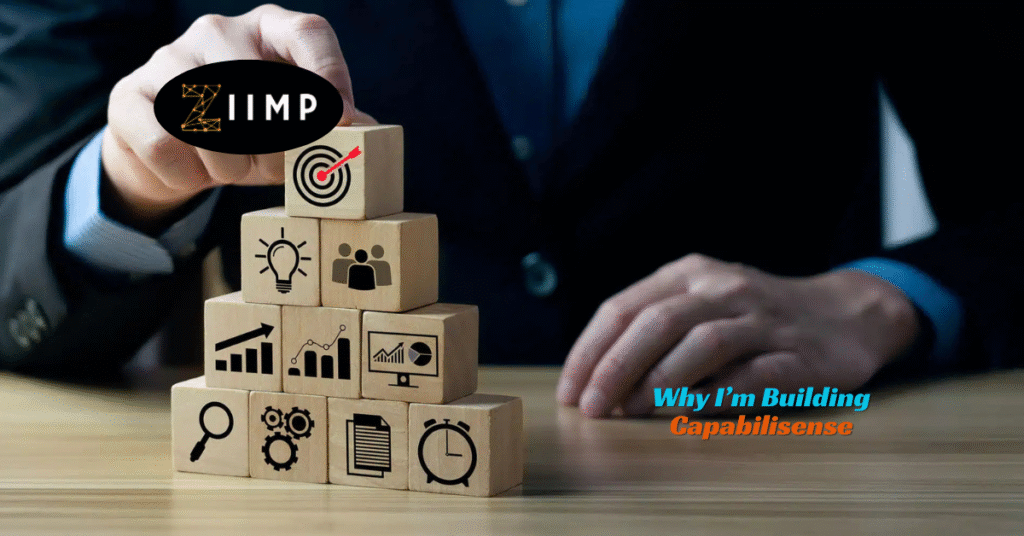
In today’s fast-changing world, Why I’m Building Capabilisense: The Real, Powerful Purpose Explained is more than just a question — it’s a guide to understanding how developing real capabilities can transform your career, personal growth, and leadership impact. Traditional skills are no longer enough; to stay future-ready, overcome challenges, and create a personal competitive advantage, we need capabilities that combine adaptability, problem-solving ability, emotional intelligence, and strategic learning.
In this article, you will discover why capability building matters, how it strengthens confidence, enhances professional versatility, improves teamwork, and sets the foundation for lasting success in both personal and organizational life. By exploring practical ways to grow capabilities and applying a capability mindset, you can achieve meaningful career progression, personal mastery, and a growth mindset that empowers every aspect of your life.
Why I’m Building Capabilisense and What It Really Means
I decided to build Capabilisense because in today’s world, what you know is no longer enough. Skills used to be the key factor in career growth, but the pace of change in industries, technology, and work culture means that knowing a set of tasks doesn’t guarantee long-term relevance. Capabilisense represents a shift: it’s about developing professional capabilities, not just skills, combining learning agility, mental flexibility, problem-solving ability, communication skills, and a mindset that helps you grow over time rather than stay stuck.
For me, embracing Capabilisense means committing to personal growth, a self-improvement journey, and career evolution. I view this as a choice to build lasting resilience, to adapt to changing demands, and to strengthen my personal identity as someone who doesn’t just perform tasks but can handle uncertainty, seize opportunities, and continuously evolve.
Why Capability-Building Matters in a Fast-Changing World
The world of work is shifting rapidly. Industries are adapting to new technologies, global markets are transforming, and business models are evolving almost overnight. Research from the corporate world shows that many organizations struggle to keep the capabilities of their workforce aligned with changing demands.
In this environment, traditional skills can become outdated quickly. That’s why capability building — an approach that blends adaptability, learning potential, and creative thinking — is becoming vital. Studies on continuous learning show that employees who engage regularly in learning and development are more likely to stay relevant and contribute to organizational benefits such as improved productivity, innovation, and adaptability.
By building capabilities today, I’m preparing myself for whatever tomorrow brings — shifting technologies, new challenges, changing roles. I aim to avoid being left behind by building future-focused skills and a capability mindset that values change as growth rather than a threat.
Skills vs. Capabilities: Why Skills Alone Aren’t Enough Anymore
A skill — like knowing how to code, design, write, or analyze data — helps you complete a specific task. But a capability goes beyond that. It’s the ability to apply a combination of skills in different contexts, adjust under pressure, solve unforeseen problems, and keep learning. With just a skill, when circumstances change, its value often decreases.
Capabilisense emphasizes adaptability skills, learning capacity, problem anticipation, and creative problem-solving. These are not tied to any one job or tool — they are portable across time, technology, and domain. That’s why focusing purely on skills often falls short in volatile environments. By embracing capability enhancement, I’m aiming for a career advantage that lasts — a kind of capability multiplier that magnifies the value of each skill I learn.
In many organizations, research shows that when teams embrace a learning mindset and dynamic capability approach rather than just skill training, they perform better over time.
For me, building Capabilisense means choosing to invest in qualities like self-awareness growth, strategic thinking, communication skills, and resilience development — all of which together build a foundation far more stable than any single skill.
How Capabilisense Makes You Future-Ready Instead of Future-Afraid
When I build Capabilisense, I am preparing myself to face uncertainty head-on. The future doesn’t intimidate me — I approach it with learning agility, an adaptability mindset, and confidence building. As industries evolve, as technology changes, I would still be ready because Capabilisense is less about the tools I know now and more about how I learn, adapt, and grow.
Being future-ready means I can handle unexpected changes, pivot when needed, and spot opportunities where others see chaos. The capacity to learn new skills quickly, to think flexibly, to combine old knowledge with new contexts — that’s the core of Capabilisense. It’s about building personal effectiveness, career readiness, and future-focused skills that prepare me to thrive even as the world changes.
Also, in workplaces, employees engaged in continuous learning and capability building tend to report higher job satisfaction, performance, and retention — showing that this mindset benefits not only individuals but teams and organizations as well.
By investing in Capabilisense, I’m shaping a path of career evolution built on adaptability, professional versatility, and capability potential.
Turning Challenges Into Growth Through Capabilities
Challenges used to feel like obstacles. With a focus on capabilities, they become chances to grow. Every setback, every unexpected problem — whether a sudden market shift, a project going wrong, or a role changing — becomes a test of my problem-solving mindset, creative thinking, resilience development, and learning capacity.
Instead of thinking “I don’t have the skill for this,” I now ask: “Can I learn, adapt, apply what I know plus new insight, and grow stronger?” That shift in thinking — from risk avoidance to growth mindset — turns adversity into opportunity. Capabilisense teaches me to embrace change, to learn from failure, to refine my responses, and to build internal confidence that isn’t dependent on external validation, but comes from the ability to handle uncertainty with calm and competence.
Over time, this mindset builds a strong base: personal transformation, capability enhancement, and professional impact. I stop fearing problems — I accept them as part of growth. I develop self-confidence, creative growth, and strategic capability that help me navigate unpredictability.
You may also like this: IP2 Network 2025: Complete Guide to Online Security
Building Capabilities for Strong, Effective Leadership
Leadership isn’t about titles — it’s about influence, trust, and the ability to guide others even when no one assigned you to lead. Capabilisense supports leadership without title, built on self-leadership, emotional intelligence, communication skills, and strategic thinking. I believe that true leadership comes when you can influence others positively, when you show consistency in behavior, and when you support, mentor, and empower others.
By cultivating self-awareness growth, I become more aware of my strengths, weaknesses, and biases, which helps in making clearer decisions. Developing emotional intelligence and communication skills helps me connect with people, understand their needs, lead teams with empathy, and promote team collaboration. With capability building, leadership becomes a habit — a way of being, not a position. That’s leadership impact that lasts.
Research supports this: leaders with strong emotional intelligence drive better team performance, foster trust, and improve organizational climate.
Through Capabilisense, I aim to build leadership qualities that matter — resilience under pressure, adaptability, clear thinking, and consistent action — even without formal authority, and to influence others, support their growth, and shape a positive culture.
Creating a Personal Competitive Advantage Through Capabilisense
In a crowded job market where many people may share similar credentials or skills, having a personal competitive advantage makes all the difference. Capabilisense builds that advantage by combining skill integration, capability enhancement, learning agility, and an innovation mindset.
Rather than relying solely on a narrow skill set, I build a broader, deeper foundation: I can learn new skills rapidly, adapt across roles, apply old knowledge creatively, solve complex problems, and communicate effectively. This gives me the flexibility to shift roles, take on new responsibilities, or pivot when market demands change. It transforms me into a versatile professional with career advantage, personal effectiveness, and capability potential that outlasts short‑term skill demands.
This capability multiplier makes me more valuable to employers, teams, and collaborators because I bring not just tasks but judgment, adaptability, initiative, and long-term growth potential.
How Capabilities Improve Knowledge Transfer & Real Business Impact
When individuals build capabilities, the benefits extend beyond personal growth — they affect teams, organizations, and business outcomes. Capabilisense encourages knowledge transfer, continuous learning, and collaboration skills.
In workplaces where people embrace this mindset, skills and ideas flow freely: mentors share knowledge, teams collaborate across functions, new ideas spark innovation, and organizational learning becomes part of the culture. This leads to stronger organizational benefits: improved innovation capability, faster adaptation to change, and better business transformation.
By building capabilities, individuals become agents of growth. They share knowledge, mentor others, and help the organization evolve. This collective capability building turns small improvements into large-scale change.
Why Organizations Succeed Faster With Strong Capability Frameworks
Organizations that adopt a structured capability framework see better long-term results. Instead of ad-hoc training, they invest in systematic learning journeys, role-based capability mapping, and continuous improvement. Research shows that companies combining these practices with organizational learning culture and dynamic capabilities outperform peers in innovation, resilience, and growth.
Moreover, organizations that support continuous learning and adaptability development achieve better retention, a stronger culture, and higher morale. Employees feel valued and are more likely to stay, contributing to talent development and stability.
With such frameworks, companies don’t just react to change — they anticipate and shape it. For me, Capabilisense is a personal version of that framework: a way to stay ready, to grow, and to contribute meaningfully whether I work solo, in a team, or as part of a bigger organization.
The Core Elements of Effective Capability-Building Systems
Based on research and real-world best practices, successful capability-building systems share key design elements:
- A clear vision for what capabilities matter — not generic skills, but the mindset, behaviors, and thinking patterns that support long-term success.
- Role‑based capability maps that align with actual responsibilities and potential growth paths.
- Practice-first learning: hands-on work, real problems, and experimentation, not just theory.
- Coaching, mentoring, feedback loops, and peer learning to reinforce habits and embed new behaviors.
- Measurement and adjustment: regularly reviewing outcomes, refining training, and aligning capabilities with evolving goals.
Organizations that apply these elements also report stronger innovation capability, improved team collaboration, and more organizational resilience.
For me, building Capabilisense means I treat my own growth like a well-designed capability program: I plan what to learn, practice often, reflect, get feedback, and measure my improvement over time.
Needs Assessment: Building Only What Truly Matters
Effective capability building begins with a real assessment — identifying where you stand and where you want to go. Instead of generic learning, I evaluate which capabilities I lack: maybe creative problem-solving, communication skills, adaptability mindset, or strategic thinking.
Then I prioritize those that will yield the greatest payoff in career growth, personal leadership, or professional versatility. This targeted approach avoids wasted effort on redundant or obsolete skills. It helps me focus on capability potential, learning capacity, and career advantage — investing in what truly matters rather than spreading effort thin.
This method mirrors how top organizations design programs: starting with diagnostics, mapping gaps, setting relevant goals, and delivering tailored development paths.
You may also like this: AreYouFashion.com Review: Complete Helpful Fashion Guide 2025
Blended Learning Approaches That Accelerate Capability Growth
In a personal or organizational setting, mixing learning formats delivers better results. Combining online courses, reading, self-study with hands-on projects, coaching, peer learning, and real-world challenges boosts both learning agility and skill application.
Blended methods support problem-solving ability, creative thinking, adaptability skills, and team collaboration. They help embed new behaviors deeply, not superficially. Research shows that workplaces embracing blended learning and continuous training have higher productivity, better retention, a stronger innovation mindset, and more adaptability to changes.
For me, this means using a mix: reading and learning new theories, applying them on real projects, seeking feedback, iterating, collaborating with others, and reflecting — a continuous learning loop leading to capability enhancement and personal transformation.
Measuring ROI: How to Track Real Capability Development
Measuring growth in capabilities is tricky but possible. Instead of just tracking courses completed or hours spent, I focus on observable changes: how often I solve novel problems, how well I adapt to unexpected shifts, how my communication or leadership influences others, or how my work quality improves.
Organizations typically measure capability building across four levels: satisfaction or engagement, proficiency gains, behavior change, and business outcomes (productivity, innovation, retention, etc.).
In my personal journey, I track:
- How quickly I learn and apply new tools or methods (learning agility).
- How often do I solve complex, ambiguous problems (problem-solving ability, creative problem-solving)?
- Feedback from peers or collaborators on communication, leadership, and impact (leadership qualities, collaboration skills).
- Outcomes such as completed projects, improved quality, new opportunities, or more meaningful work (capability advantage, professional impact).
Using this kind of reflective tracking gives me a clearer sense of progress — beyond simple skill enhancement — and helps maintain momentum in the self-improvement journey.
How Capabilisense Builds Confidence That Feels Real — Not Forced
Confidence built on capability has a different quality. It doesn’t depend on external approval or short bursts of success. Instead, it grows quietly, steadily, rooted in real experience, repeated learning, and tangible improvement.
When I face uncertainty or a tough challenge, I don’t panic — because I trust in my capability mindset, adaptability skills, learning potential, and past experiences. That trust becomes internal confidence, a steady foundation that supports risk-taking, creative problem-solving, and long-term career readiness.
With Capabilisense, confidence becomes sustainable, rooted in real growth and continuous improvement rather than temporary wins or validation.
How Capability-Building Expands What’s Actually Possible for You
With Capabilisense, the range of possibilities expands. What once seemed out of reach — new careers, new roles, new creative work — becomes possible because you have the flexible mindset, skill adaptability, and strategic thinking to navigate unfamiliar territory.
You start seeing growth opportunities rather than limits. Instead of being defined by your past skill set or job title, you become defined by your ability to evolve, learn new things, adapt quickly, and lead when needed. That means career advantage, professional versatility, and personal effectiveness become part of your identity.
Investing in Capabilisense transforms limitations into potential — turning uncertainty into a field of new possibilities.
Serving Others Better Through Stronger Capabilities
Capabilisense isn’t just about self-growth. When you grow, you are better positioned to help others — mentor, coach, collaborate, and share knowledge. By passing on what you learn, you foster knowledge dissemination, help build team collaboration, and contribute to a learning culture.
Helping others grow becomes part of your own growth cycle: your personal transformation reinforces collective growth. Through leadership development, emotional intelligence, and communication skills, you can support others’ journeys, encourage continuous improvement, and amplify your positive impact.
This ripple effect strengthens both you and your community — turning individual growth into shared success.
Why “I’m Building Capabilisense” Is Another Way of Saying “I’m Becoming Who I Need To Be”
At its core, building Capabilisense means choosing to evolve — not just professionally but personally. It’s a commitment to self-development, capability evolution, and a growth mindset. It’s about becoming someone who can adapt, lead, learn continuously, and influence others positively.
This path shapes your identity, not just your resume. It builds internal confidence, self-awareness growth, and personal identity grounded in capability rather than credentials. It becomes a long‑term journey of personal transformation, career progression, and professional impact.
By embracing Capabilisense, I’m telling the world — and myself — that I value growth, resilience, adaptability, and meaningful influence over mere titles or short‑term gains.
You may also like this: Ttweakhotel Discount Code: Full 2025 Trusted Legitimacy Guide
Frequently Asked Questions (FAQs)
What is Capabilisense?
Capabilisense is a mindset and practice focused on building real capabilities, not just skills. It helps you adapt, solve problems, learn quickly, and grow personally and professionally.
Why is capability building more important than learning skills alone?
Skills help you complete tasks, but capabilities prepare you to handle change, solve new problems, and grow continuously. They are long-lasting and adaptable to any situation.
How does Capabilisense make me future-ready?
By developing capabilities like learning agility, resilience, and adaptability, you can confidently face unknown challenges, new roles, and fast-changing environments.
Can Capabilisense improve my leadership even without a title?
Yes. Capabilisense strengthens self-awareness, communication, and decision-making, which helps you influence others, guide teams, and take initiative regardless of your position.
What kind of challenges can Capabilisense help me overcome?
It helps you deal with uncertainty, complex problems, competitive pressure, stalled projects, and career transitions, turning obstacles into opportunities for growth.
How does building Capabilisense benefit my career?
It creates a personal competitive advantage, makes you more versatile, improves your problem-solving ability, and opens doors to growth opportunities and new roles.
Does Capabilisense help with personal growth, too?
Yes. It improves your self-confidence, emotional intelligence, adaptability mindset, creative thinking, and ability to learn from experience, shaping who you become.
Can organizations benefit from employees who focus on Capabilisense?
Absolutely. Employees with strong capabilities improve teamwork, knowledge transfer, innovation, and overall business performance, helping the organization grow faster.
How do I measure if my Capabilisense is improving?
You can track it by observing how well you handle new challenges, adapt to change, solve complex problems, lead others, and learn continuously.
Is Capabilisense only for career growth or personal life, too?
It’s for both. Capabilisense helps you handle personal challenges, strengthen relationships, lead effectively, and make better decisions in all areas of life.
Final Thoughts
Building Capabilisense is more than a strategy — it’s a way of life. It’s about choosing capability building over static skills, embracing continuous learning, and investing in professional versatility, personal growth, and leadership qualities.
In a world of rapid change and uncertainty, Capabilisense helps me stay future-ready, grounded, and capable of shaping my path instead of reacting to it. It’s the foundation for long-term career advantage, personal transformation, and real impact.
If you’re looking for a way to grow beyond skills, to become more than a list of tasks — building Capabilisense might just become the most important investment you ever make.
✅ Keep visiting this site for fresh posts, trending topics, and useful updates.
Disclaimer:
“The content in this article is for educational purposes only. It provides general information on capability building and personal growth. Readers should use their judgment and seek professional advice when applying strategies to career or personal decisions. Results may vary.”
Author Profile

- I am the editor and publisher at Ziimp.net. I write clear and helpful content about credit cards, markets, technology, and trading. My focus is on simplifying finance and using smart tools to help readers make better decisions. I also explore new ideas to improve the platform and create a better experience for users.
Latest Posts
 FinanceDecember 13, 2025Indexationnews com Explained: Honest Guide to Finance & Loans
 FinanceDecember 13, 2025AnalyzingMarket com Explained: Honest Insights & Reviews
 TechnologyDecember 12, 2025SSIS 469 Error Explained: Ultimate Causes, Fixes, and Prevention
 ReviewDecember 12, 2025Techmapz com Guide 2025: Full Comprehensive Platform Overview